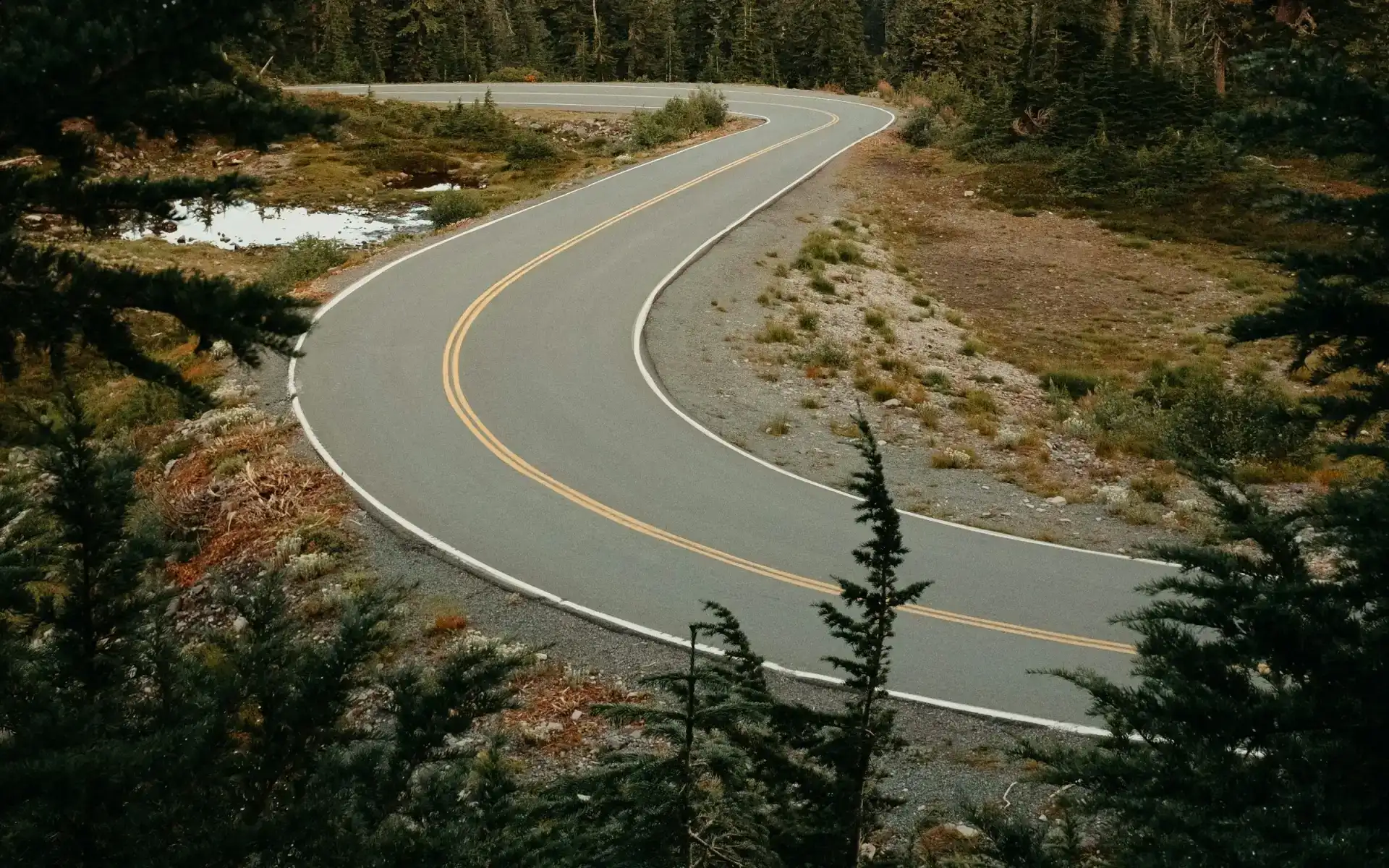
A winding two-lane road curving through evergreen forest on Mount Baker, Washington

All exams/Driving & Licenses/Washington DOL Permit/Free questions

Free Washington DOL Permit practice questions

Tap an answer to see if you are right, and why. 20 questions across 11 topics, mostly Intersections and turns (3), and 2 have a road sign to read.

Questions last updated October 15, 2026 · Original practice questions written from the Washington Driver Guide (Washington State Department of Licensing, 2025 edition) and checked against its text; not official DOL questions. Not affiliated with the Washington State Department of Licensing.

The real test

40 questions · 32 correct (80%) to pass · you can miss only 8.

Need 32 of 40You can miss 8

0 of 20 answeredTap an answer to check it
  1. Licensing (GDL)1 of 20

    How many of the 40 questions must you answer correctly to pass the Washington driving knowledge exam?

    The answer

    Answer: A. Washington DOL sets the pass mark at 32 correct answers out of 40, which is 80 percent. A passing score stays valid for two years, so you can still use it if you take the skills exam later within that window. If you fail, a waiting period may apply before you can retest, and the exam is offered in 12 languages.

    Source: Washington DOL — Do I need to take a test? (knowledge exam)

  2. Traffic signals and markings2 of 20

    At a solid red light, a driver may turn right only after:

    The answer

    Answer: D. Solid red means stop. After a complete stop you may turn right if no sign forbids it and you can enter traffic with plenty of room. Wait for the intersection to clear of vehicles and pedestrians before moving. A turn on red is allowed only when the way is truly open.

    Source: Washington Driver Guide — 4.11 Traffic light signals

  3. Intersections and turns3 of 20

    Two vehicles reach a four-way stop at about the same moment. Which one yields?

    The answer

    Answer: D. At stop-sign intersections the first vehicle to arrive goes first, the second goes second, and so on. When two arrive at about the same time, yield to the one on your right. A driver turning left must also yield to vehicles going straight or turning right.

    Source: Washington Driver Guide — 4.13 Common intersections (four-way stop)

  4. Speed and space4 of 20

    What is the speed limit in a Washington school zone?

    The answer

    Answer: B. The school zone limit is 20 mph because higher speeds raise the risk of fatal crashes. Signs may clarify the hours when the reduced limit applies. Children may use the playground or take part in after-school activities outside normal hours, so slow down and watch carefully any time you drive near a school.

    Source: Washington Driver Guide — 4.17 Zones (school zone)

  5. Alcohol and drugs5 of 20

    At what blood alcohol concentration is a driver aged 21 or older considered to be driving under the influence in Washington?

    The answer

    Answer: D. For drivers 21 and older, a BAC of 0.08 percent or higher counts as a DUI. Drivers under 21 face the same consequences at only 0.02 percent. Washington also has a drug limit: adults are over the line at 5 nanograms of active THC per milliliter of blood, and anyone under 21 at any detectable amount.

    Source: Washington Driver Guide — 1.15 Maintaining your license (driving under the influence)

  6. Passing schoolbus6 of 20

    A school bus ahead has red lights flashing and its stop sign extended. Drivers traveling in the same direction as the bus must:

    The answer

    Answer: A. Never pass a school bus with flashing lights. Every driver traveling the same way must stop while the red lights flash and the stop sign is out, and that includes drivers in turn lanes. You may go once the lights stop, the sign is retracted and the arm returns to the front bumper. Fines are doubled for passing a stopped bus.

    Source: Washington Driver Guide — 4.2 Sharing with school buses

  7. Road signs7 of 20

    A fluorescent yellow-green sign warns drivers about:

    The answer

    Answer: C. The guide ties sign colors to meaning: red for prohibited actions, orange for construction and maintenance, yellow for general warnings, fluorescent yellow-green for school, pedestrian and bicycle activity, white for regulations, green for directions, blue for motorist services, and brown for recreation and cultural sites.

    Source: Washington Driver Guide — 4.12 Signs (sign colors)

  8. Special conditions8 of 20

    Washington law requires headlights to be on from:

    The answer

    Answer: B. The legal requirement runs from half an hour after sunset to half an hour before sunrise. The guide suggests an easier habit: use headlights all the time, or at least whenever it is dark, rainy, snowy, foggy or smoky. Headlights help you see, and they also help others see you.

    Source: Washington Driver Guide — 2.5 Vehicle maintenance (headlights)

  9. Sharing the road9 of 20

    Who has the right-of-way at a crosswalk or intersection in Washington?

    The answer

    Answer: A. Pedestrians and bicyclists have the right-of-way at crosswalks and intersections whether or not the road is marked. Wait until a pedestrian has cleared your lane and one additional lane before you proceed. For someone using a wheelchair, cane or service animal, wait until they have fully crossed the street.

    Source: Washington Driver Guide — 4.1 Sharing with people

  10. Occupant safety10 of 20

    Until what age must a child ride in a rear-facing car seat in Washington?

    The answer

    Answer: C. Children up to age 2 must ride in a rear-facing car seat. Washington sets the restraint a child needs by age and size, so use the correct seat every time you or anyone else travels with a child. Children move to the next stage as they grow, and each stage is chosen by age and size.

    Source: Washington Driver Guide — 2.6 Occupant protection (child seats)

  11. Parking11 of 20

    You may not park within how many feet of a fire hydrant?

    The answer

    Answer: C. The 15-foot rule keeps hydrants clear for firefighters. Other limits in the guide include 30 feet from a traffic signal, stop sign or yield sign, 5 feet from a driveway or alley, 50 feet from a railroad crossing, and not more than 12 inches from the curb. Never park in an intersection or on a crosswalk.

    Source: Washington Driver Guide — 4.18 Parking (general parking rules)

  12. Licensing (GDL)12 of 20

    How long is a Washington instruction permit valid?

    The answer

    Answer: A. An instruction permit is valid for one year and may be renewed for a fee. The knowledge exam score is valid for two years, so waiting too long to take the skills exam may mean taking the knowledge exam again. If you are not enrolled in a driver training course, you can take the knowledge exam after you turn 15 and a half.

    Source: Washington Driver Guide — 1.8 Getting a personal driver license (instruction permit)

  13. Traffic signals and markings13 of 20

    A flashing red traffic light means:

    The answer

    Answer: C. A flashing red light works exactly like a stop sign. Come to a full stop and go when it is your turn. A flashing yellow light is different: it works like a yield sign, so slow down and treat the intersection as uncontrolled, proceeding when you have the right-of-way.

    Source: Washington Driver Guide — 4.11 Traffic light signals

  14. Intersections and turns14 of 20

    Legally, every intersection in Washington is:

    The answer

    Answer: C. Every intersection counts as a crosswalk even when no crosswalk lines are painted. That is why you must watch for and yield to pedestrians and bicyclists at every intersection, including driveways, parking lot entrances and side streets. Before entering, look several times in each direction and check over your shoulder.

    Source: Washington Driver Guide — 4.13 Common intersections

  15. Speed and space15 of 20

    Even when you are driving below the posted speed limit, you can get a ticket if:

    The answer

    Answer: A. Speed limits show the maximum legal speed in ideal conditions. Washington law also requires you to drive at a speed that is safe for current conditions, so you may need to go below the limit in rain, fog, snow or heavy traffic. You can drive under the limit, but exceeding it is always illegal.

    Source: Washington Driver Guide — 4.12 Signs (speed limit) and 5.1 Speed

  16. Alcohol and drugs16 of 20

    For a driver under 21, which THC level counts as a DUI in Washington?

    The answer

    Answer: D. Adults 21 and over are over the legal THC limit above 5 nanograms of active THC per milliliter of blood. Drivers under 21 face the same consequences at anything above 0 nanograms. Recreational cannabis is legal at 21, but driving after consuming any cannabis is illegal for all ages.

    Source: Washington Driver Guide — 1.15 Maintaining your license (THC concentration)

  17. Road signs17 of 20

    STOPWhat does this sign mean?

    A stop sign requires you to stop at the:

    The answer

    Answer: B. At a stop sign you must stop at the stop line, the crosswalk or the corner, then look for crossing vehicles and pedestrians in all directions and yield the right-of-way. Where a stop line exists, stop before your vehicle reaches it, or before the crosswalk if there is one.

    Source: Washington Driver Guide — 4.12 Signs (stop) and 4.16 Road markings (stop lines)

  18. Special conditions18 of 20

    When you see a roadside response vehicle with flashing lights ahead, you must:

    The answer

    Answer: B. An emergency zone is created by a crash, broken-down vehicle or person in distress. When you see a roadside vehicle with flashing lights, move over to a farther lane or slow to at least 10 mph below the posted speed limit. Never drive faster than 50 mph in the emergency zone. Responders include tow trucks, police, fire trucks and highway crews.

    Source: Washington Driver Guide — 4.17 Zones (emergency zone)

  19. Intersections and turns19 of 20

    Before a left or right turn, you should signal at least:

    The answer

    Answer: B. Put your turn signal on at least 100 feet before you turn, then look for a safe gap and check the street you are entering. Keep the habit of signaling even when nobody is around, and make sure the signal stops blinking once the turn is finished.

    Source: Washington Driver Guide — 4.14 Turning and 2.5 Vehicle maintenance (turn signals)

  20. Road signs20 of 20

    YIELDWhat does this sign mean?

    A yield sign means you must:

    The answer

    Answer: C. A yield sign tells you to slow down and allow traffic that has the right-of-way to go first. You do not have to stop if the way is clear, but be ready to. A stop sign, in contrast, always requires a full stop.

    Source: Washington Driver Guide — 4.12 Signs (yield)

That’s the free set. The full bank has 300.

More original practice questions across the listed topics, a 40-question timed exam simulator, and saved mistake review. Published Washington DOL standard: 32 of 40 correct (80%). A passing score is good for 2 years, and the test is offered in 12 languages. If you do not pass, a waiting period may apply before you can retest. One payment of $8.99, yours forever.

Practice the free set

Washington DOL Permit alcohol and drug questions

Part of the bank cover alcohol and drugs. 2 are free here, with the answer and where it comes from:

  • At what blood alcohol concentration is a driver aged 21 or older considered to be driving under the influence in Washington? Answer: 0.08 percent or higherWashington Driver Guide — 1.15 Maintaining your license (driving under the influence)
  • For a driver under 21, which THC level counts as a DUI in Washington? Answer: Any amount of active THC above 0.00 ngWashington Driver Guide — 1.15 Maintaining your license (THC concentration)