CNA Certification/Cheat sheet
CNA Certification cheat sheet: key rules and summary
Written: 70 multiple-choice questions (60 scored, 80% practice target); Skills: 5 randomly selected skills in 30 minutes (must pass all 5).
- 18 numbers
- 4 sections
- 5 rules people get wrong
Memorise these first
- 120/80 mmHgNormal adult blood pressure systolic/diastolic (report systolic <90 or >140)
- 20 secondsMinimum friction washing hands with soap and water (hands downward)
- 30 mL (or cc)Equivalent of 1 fluid ounce (oz) in metric clinical measurement
Vital Signs
Essential- 120/80 mmHg
- Normal adult blood pressure systolic/diastolic (report systolic <90 or >140)
- 60–100 bpm
- Normal adult resting radial pulse (count for 60 seconds if irregular)
- 12–20 bpm
- Normal adult resting respirations (count secretly after taking pulse)
Infection Control
Zero Tolerance- 20 seconds
- Minimum friction washing hands with soap and water (hands downward)
- Downwards
- Hold fingers lower than wrists so contaminated water drains off fingertips
- Paper towel
- Use clean dry paper towel to turn off water faucet to avoid recontamination
Safety & Rights
Enforced- Locked brakes
- Wheelchair and bed wheels must be locked before ANY patient transfer
- Within reach
- Call light must ALWAYS be placed within resident's direct reach before leaving
- Immediate report
- Mandatory reporting: suspect abuse or neglect and you must immediately notify the nurse
Vital signs normal ranges
- 120/80 mmHg
- Normal adult blood pressure systolic/diastolic (report systolic <90 or >140)Basic Nursing Skills — Vital Signs
- 60–100 bpm
- Normal adult resting radial pulse (count for 60 seconds if irregular)Basic Nursing Skills — Vital Signs
- 12–20 bpm
- Normal adult resting respirations (count secretly after taking pulse)Basic Nursing Skills — Vital Signs
- 98.6°F (37°C)
- Normal oral temperature (acceptable range: 97.6°F–99.6°F)Basic Nursing Skills — Vital Signs
- 95%–100%
- Normal pulse oximetry (SpO2) rangeBasic Nursing Skills — Vital Signs
Infection control & hygiene
- 20 seconds
- Minimum friction washing hands with soap and water (hands downward)Infection Control — Hand Hygiene
- Downwards
- Hold fingers lower than wrists so contaminated water drains off fingertipsInfection Control — Hand Hygiene
- Paper towel
- Use clean dry paper towel to turn off water faucet to avoid recontaminationInfection Control — Hand Hygiene
- Gown → Mask → Gloves
- Standard PPE donning (putting on) sequenceInfection Control — PPE Protocol
- Gloves → Gown → Mask
- Standard PPE doffing (removal) sequence (gloves are most contaminated)Infection Control — PPE Protocol
Measurements and conversions
- 30 mL (or cc)
- Equivalent of 1 fluid ounce (oz) in metric clinical measurementBasic Nursing Skills — Intake & Output
- 240 mL
- Standard 8-ounce cup of liquidBasic Nursing Skills — Intake & Output
- Eye level
- Read graduate container on a flat surface at eye level for accurate outputSkills Evaluation — Measuring Output
- Zero (balance)
- Always balance scale to zero before weighing a residentSkills Evaluation — Weight Measurement
Safety, rights and legal penalties
- Locked brakes
- Wheelchair and bed wheels must be locked before ANY patient transferSafety and Emergency Procedures
- Within reach
- Call light must ALWAYS be placed within resident's direct reach before leavingResident Safety — Call Lights
- Immediate report
- Mandatory reporting: suspect abuse or neglect and you must immediately notify the nurseLegal & Ethical — Elder Abuse
- Up to $250k / Revocation
- HIPAA violation penalties: fines up to $250,000, termination, and loss of CNA certificationLegal & Ethical — Confidentiality
Second read
Rules people get wrong
- Failing hand hygiene is the #1 reason candidates fail the clinical skills exam. Scrub vigorously for 20 seconds, keep fingers lower than wrists, and never touch the inside of the sink basin.
- Always lock wheelchair and bed brakes before initiating any transfer. Forgetting to lock wheels is an automatic critical safety fail.
- Always verify resident identity and knock, greet by name, introduce yourself, explain the procedure, and close the privacy curtain before beginning.
- Never leave a resident without placing the call light within their reach. Evaluators check this before marking the skill complete.
- Scope of practice boundary: never administer prescription drugs, change sterile dressings, or perform nursing assessments. Report all changes directly to the RN.
Take it with you
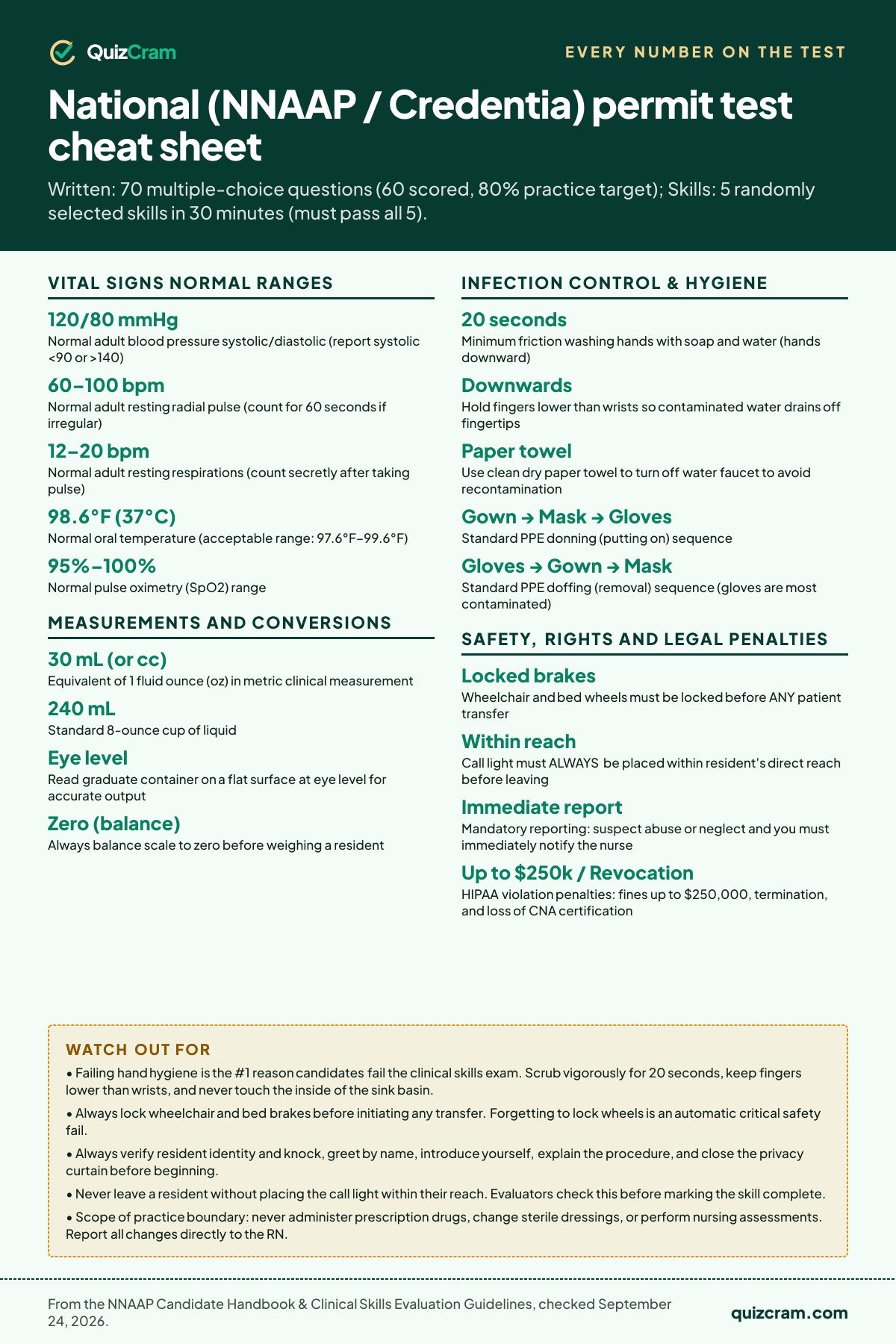
Save it as one poster
Knowing the numbers is half of it. Can you apply them?
The real test asks these as scenarios. Take the 20 free National (NNAAP / Credentia) questions — each answer explains the rule and cites the handbook section. If you want the full bank and timed practice tests, it’s a one-time $14.99.