The Short Answer
The ServSafe Food Handler assessment is a 40-question, non-proctored test with no time limit. You need 75% to pass, which is 30 of 40 correct. You get three attempts; after a third failure you must buy a new course. The course takes about 60 to 90 minutes, you have 12 months to start it and 60 days to finish once started.
Two things trip people up. First, there is no single national food handler test: each ANAB-accredited provider (ServSafe, state and county programs and others) sets its own length and pass mark, and some states and counties require their own approved card. Second, there is no official answer key to memorize. The questions are drawn from FDA Food Code rules, so learning those rules is the reliable way to pass, and the same rules apply whichever provider you use. Our free food handler practice test covers them.
What the Test Covers
ServSafe lists five course areas, and the test follows them:
- Basic food safety — why foodborne illness happens and who is most at risk.
- Personal hygiene — handwashing, gloves, work clothes, and when sick employees must stay away from food.
- Cross-contamination and allergens — keeping raw and ready-to-eat food apart, and the nine major allergens.
- Time and temperature — the temperature danger zone, cooking, holding, cooling and reheating.
- Cleaning and sanitation — the difference between cleaning and sanitizing, and how to do each.
Most points come from time and temperature and from personal hygiene, because they have exact numbers and clear yes-or-no rules.
The Numbers and Rules to Learn
These come straight from the FDA Food Code 2022, the model code most state health departments build on.
| Rule | Food Code requirement |
|---|---|
| Cold holding | 41°F (5°C) or lower |
| Hot holding | 135°F (57°C) or higher |
| Poultry, stuffed foods | Cook to 165°F |
| Ground meat, ground fish, non-intact meats | Cook to 155°F for 17 seconds |
| Fish and whole cuts of meat (steaks, chops) | Cook to 145°F for 15 seconds |
| Cooling cooked food | 135°F to 70°F within 2 hours, then to 41°F within 6 hours total |
| Reheating for hot holding | 165°F for 15 seconds |
| Ready-to-eat food held cold | Mark the date; discard after 7 days at 41°F or lower (the day of preparation is Day 1) |
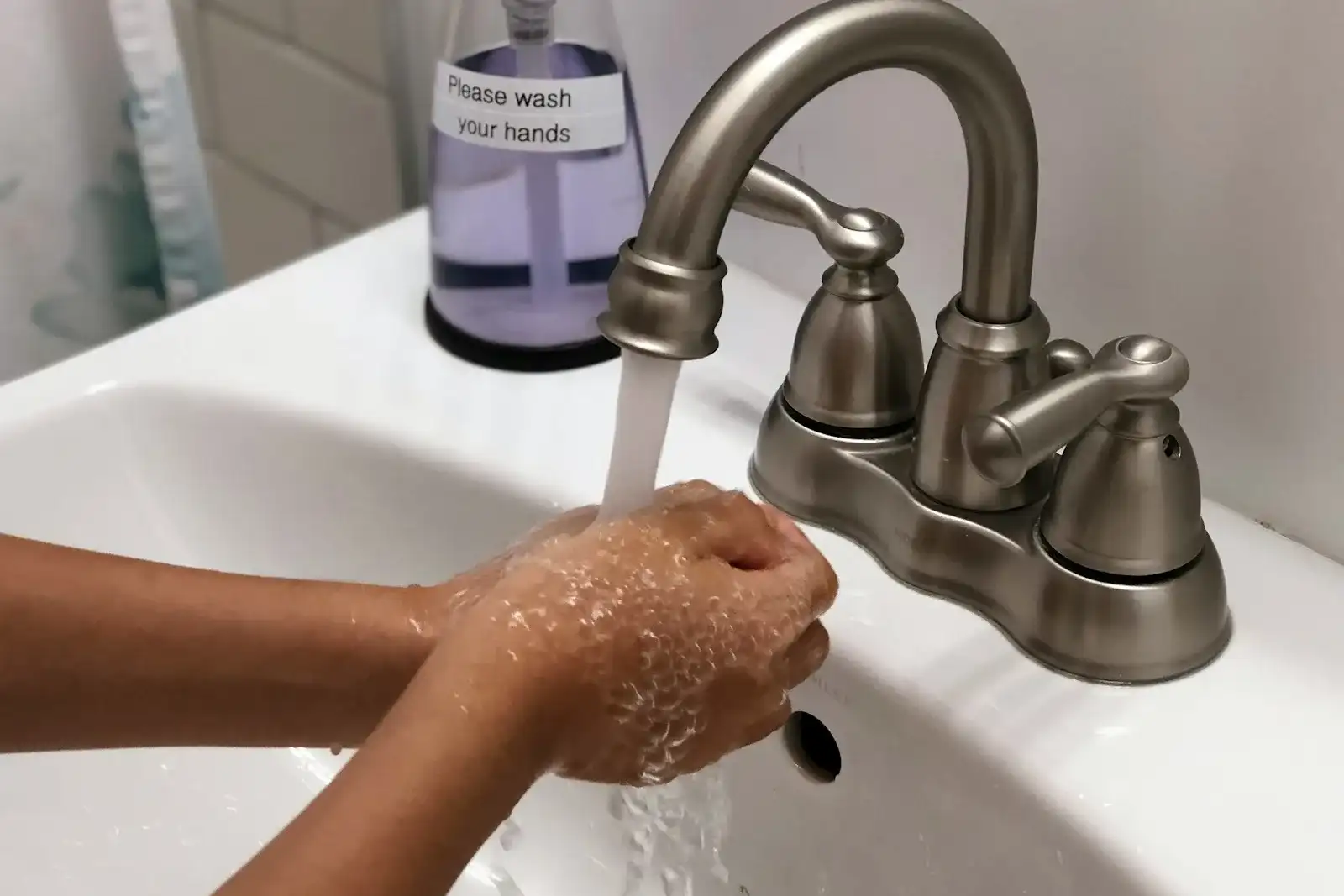
| Handwashing | Clean hands and exposed arms for at least 20 seconds, using soap, in a handwashing sink |
Sick employees
The Food Code requires food employees to report vomiting, diarrhea, jaundice, sore throat with fever, or an open, draining infected wound. They must also report a diagnosis of norovirus, hepatitis A, Shigella, Shiga toxin-producing E. coli, typhoid fever or nontyphoidal Salmonella. The manager then restricts or excludes the employee, which means keeping them away from food and food surfaces.
The nine major allergens
Milk, eggs, fish, crustacean shellfish, tree nuts, peanuts, wheat, soybeans and sesame. Sesame became the ninth allergen on 1 January 2023 under the FASTER Act. Learn the list as a set: test items often ask which food is not a major allergen.
How the Scenario Questions Think
Many items describe a kitchen moment and ask for the single correct action. The pattern is consistent:
- Separate before you do anything else. Raw chicken beside salad ingredients is a cross-contamination problem; the answer moves or stores them apart, with raw animal foods below ready-to-eat foods.
- Check the number, not the look. Color and feel never prove food is safe; the answer uses a thermometer reading.
- Wash hands, then act. After touching raw meat, a phone, a trash bag or your face, the safe answer is to wash your hands again before touching food.
- When in doubt about a sick worker, keep them away from food. Do not choose “wear gloves and keep working” for vomiting or diarrhea.
- Cleaning is not sanitizing. Clean first to remove dirt, then sanitize to reduce germs. Both steps are required on food-contact surfaces.
How to Prepare
- Memorize the table above. Make flashcards for the six temperatures and the 2-hour and 6-hour cooling windows.
- Take a practice test early and read every explanation, including the ones you got right. Retry the missed items the next day.
- Check your local rule. A card may need to be state- or county-specific. California, Texas, Illinois and Washington each have their own requirements, so confirm with your health department before you pay for a course.
- Finish the course in one or two sittings. The 60-day completion window starts when you begin the course.
- Use your attempts wisely. You have three. If you miss the pass mark, review the topics you missed before retaking.
For a manager-level credential, see the ServSafe Manager exam guide and the ServSafe Manager practice test.
Frequently Asked Questions
How many questions are on the ServSafe Food Handler test?
40 questions. It is a non-proctored test with no time limit; ServSafe says people take about 90 minutes on average.
What is the passing score for the ServSafe Food Handler test?
75%, which is 30 of 40 questions. Other providers can set a different pass mark, so check yours.
How many times can I take the ServSafe Food Handler test?
Three attempts. After a third failed attempt you must buy a new course.
Are there food handler test answers I can study?
There is no official answer key. The questions are based on FDA Food Code rules, so study those: holding and cooking temperatures, cooling times, handwashing, allergens and when to keep a sick worker away from food.
Is a food handler card the same as a food manager certificate?
No. A food handler card is a basic training certificate for food workers. A Certified Food Protection Manager certificate is a higher-level credential, taken in a proctored exam, that many places require for at least one person in charge.
How long is a food handler card valid?
It depends on where you work. Validity is set by the state or county and commonly runs two to three years, so confirm it with your local health department.
Sources
- ServSafe — Food Handler program — 40-question non-proctored test, no time limit, 75% to pass, three attempts, 60 to 90 minute course, 12-month start window and 60 days to complete.
- U.S. FDA — Food Code 2022 — sections 3-501.16 (hot and cold holding), 3-401.11 (cooking), 3-501.14 (cooling), 3-403.11 (reheating), 3-501.17 (date marking), 2-301.12 (handwashing) and 2-201.11 (employee illness reporting).
- U.S. FDA — Food Allergies — the nine major food allergens, with sesame added by the FASTER Act effective 1 January 2023.
- ServSafe — Regulatory requirements — state and local food handler requirements vary; confirm yours.