Certification
ServSafe Manager
- For
- The manager or person in charge
- Exam
- 90 questions, 70% to pass
- Proctor
- Required
- Recognized
- 5 years
ServSafe Food Protection Manager · Free
Free ServSafe Manager questions with every answer explained and checked against the FDA Food Code, in the order food moves through a kitchen.

ServSafe Manager exam
The ServSafe Food Protection Manager exam has 90 multiple-choice questions. 80 are scored and 10 are unscored pilot questions. You pass with 70% or higher, at least 56 of the 80 scored questions. A Registered ServSafe Proctor must supervise the exam, and the certification is recognized for five years. Preparing foods (20%) and managing facilities (15%) are the largest of its nine areas.
Sources: ServSafe Manager FAQ · ServSafe Exam Development FAQs
Station 01Practice
Ten order tickets from the free set, one per topic in turn. Tap an answer to see if you are right and why.
No. 01Flow of food preparation
A manager spot-checks roast chicken thighs before service. What minimum reading is required?
Answer: B. 165°F (74°C) for <1 second
Poultry must be cooked to a minimum internal temperature of 165°F (74°C), held for less than 1 second (instantaneous). This temperature kills Salmonella and other pathogens commonly found in poultry. Whole cuts of meat like beef and pork require 145°F for 15 seconds, ground meats require 155°F for 17 seconds, and hot holding maintains food at 135°F or above. Managers must verify cooking temperatures with calibrated thermometers.
No. 02Safe food handler
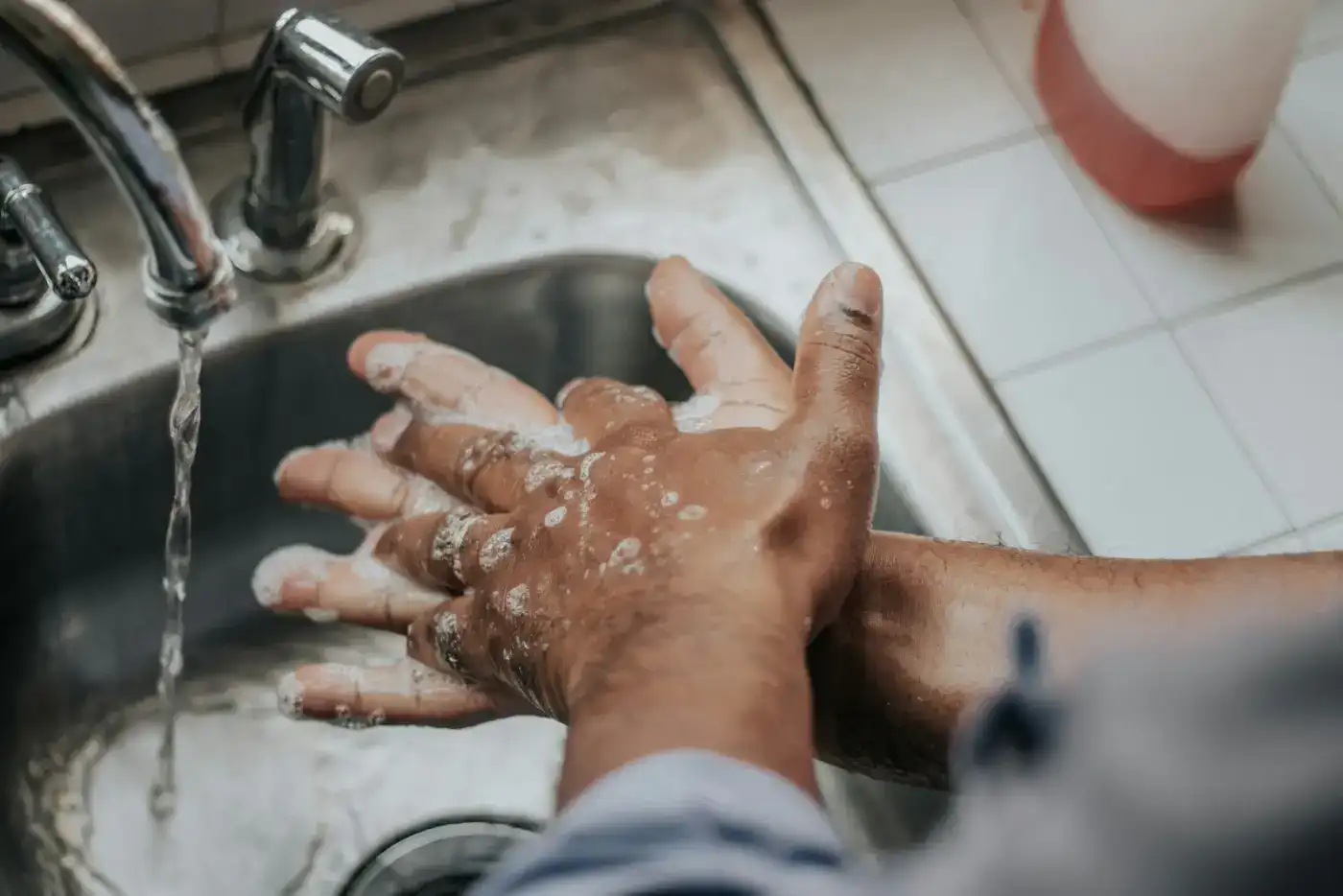
During a hygiene audit, a manager times the scrubbing step at the hand sink. What minimum time should it last?
Answer: A. 10 to 15 seconds
The scrubbing step lasts at least 10 to 15 seconds: rub hands and arms together vigorously, working between the fingers and under the nails. 20 seconds is the minimum for the whole handwashing process, from wetting to rinsing, which is why it is the common wrong answer here. Five seconds is too short to remove soil and pathogens, and 30 seconds is longer than required.
No. 03Forms of contamination
Which of the Big Nine food allergens is found in most bakery products and soy sauce?
Answer: B. Soybeans
Soy is the allergen in soy sauce, and soy flour and soy lecithin turn up in many breads and baked goods. Milk is a dairy allergen and is not an ingredient of soy sauce. Eggs are common in baked goods but are not part of soy sauce either. Peanuts show up in candies, sauces, and some baked items, yet they are not what soy sauce is made from.
No. 04Flow of food purchasing
A manager sets the walk-in thermostat. What is the warmest that stored TCS food may be?
Answer: C. 41°F (5°C)
Cold food must be stored at 41°F (5°C) or below to prevent bacterial growth. The temperature danger zone is between 41°F and 135°F, where bacteria multiply rapidly. While 35°F is also safe, it is not the maximum allowable temperature. 45°F and 50°F are within the danger zone and would violate food safety standards. Managers must ensure refrigerators are maintained at 41°F or below and checked regularly.
No. 05Food safety management
How many principles make up the HACCP food safety management system?
Answer: A. 7
HACCP (Hazard Analysis and Critical Control Points) consists of 7 principles: conduct a hazard analysis, determine critical control points, establish critical limits, establish monitoring procedures, establish corrective actions, establish verification procedures, and establish record-keeping and documentation procedures. These principles provide a systematic approach to identifying and controlling food safety hazards throughout the flow of food.
No. 06Cleaning and sanitizing
A manager mixes chlorine sanitizer for wiping prep tables. What test-strip reading is the target?
Answer: C. 50-100 ppm
ServSafe lists chlorine at about 50 to 99 ppm for food-contact surfaces, so 50-100 ppm is the correct choice; the exact value depends on water temperature and pH on the label. 200-400 ppm is the typical quat range, which is far too strong for chlorine. 500-1000 ppm would leave unsafe residue on surfaces. A range of 10-25 ppm overlaps with iodine and is too weak for chlorine to sanitize reliably.
No. 07Flow of food preparation
A manager trains staff on why TCS food must stay hot or cold. Which range must food avoid or pass through quickly?
Answer: D. 41°F to 135°F (5°C to 57°C)
ServSafe defines the temperature danger zone as 41°F to 135°F (5°C to 57°C), and pathogens grow fastest between 70°F and 125°F inside it. The range 32°F to 212°F runs from freezing to boiling, which is far too wide. From 135°F to 212°F is the hot-holding and cooking range, where growth is controlled. Temperatures from 0°F to 41°F cover freezer and cold-holding storage, which sit below the danger zone.
No. 08Safe food handler
Which of these is an example of poor personal hygiene that could contaminate food?
Answer: C. Scratching the scalp, then handling food unwashed
Scratching the scalp moves pathogens from hair and skin onto the hands, and handling food afterward without washing passes them to the food. Washing hands after using the restroom is a required hygiene step, not a lapse. A clean apron keeps soil from the uniform away from food. A hair net is a required hair restraint that keeps hair out of food, so it is good practice too.
No. 09Forms of contamination
A food handler finds a piece of broken glass in a salad bowl after it was served. This is an example of which type of hazard?
Answer: A. Physical hazard
Broken glass in food is a physical hazard. Physical hazards are objects that can cause injury when ingested, such as glass, metal shards, bone fragments, or jewelry. Biological hazards include bacteria and viruses, chemical hazards include cleaning chemicals and pesticides, and allergenic hazards involve food proteins that trigger immune responses. Physical hazards can cause cuts to the mouth, throat, or digestive tract.
No. 10Flow of food purchasing
A case of milk arrives at 50°F. The milk is within its use-by date. What is the correct action?
Answer: B. Reject the delivery as too warm to accept
Under Food Code 3-202.11, milk may be received at 45°F if it is cooled to 41°F within 4 hours, but 50°F is above that limit, so the delivery is rejected. The use-by date does not make warm milk safe. Freezing it does not undo the time it spent warm and changes the product. Keeping it and checking hourly accepts milk that failed the receiving temperature.
Station 02The exam
Nine areas on one prep tray, each sized by ServSafe’s exam blueprint (80 scored items).
90 multiple-choice questions. Your score comes from 80; the other 10 are pilot questions ServSafe is trying out. They look the same, so answer every one with care. You need 70% or higher.
Not you alone: a Registered ServSafe Proctor supervises it, in a classroom or online through ServSafe’s proctoring partner. It is accredited by ANAB under the Conference for Food Protection standards.
Two attempts within 30 days. After a second fail, wait 60 days from your last attempt. No more than four attempts in 12 months (retest policy).
Station 03Receive and store
The flow of food starts at the back door and the walk-in cooler. Check every delivery before it goes into storage.
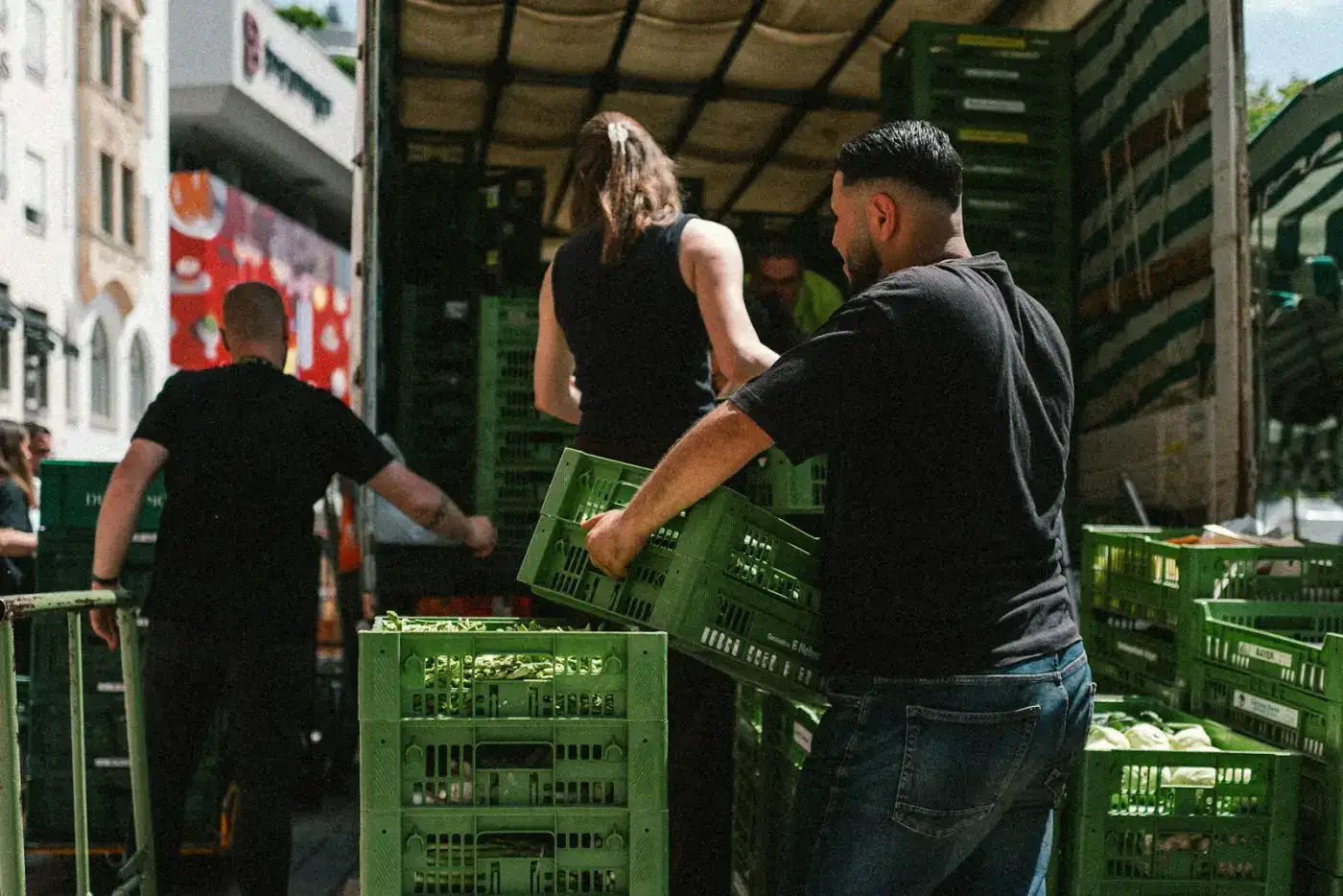
Receiving temperatures: Food Code 3-202.11. The cooler order keeps raw animal food away from ready-to-eat food (3-302.11), so anything that drips lands on food that will be cooked hotter.
Date marking: ready-to-eat TCS food made in-house and kept more than 24 hours keeps up to 7 days at 41°F; the day it was made is day 1 (3-501.17).
Station 04Cook and cool
Preparing foods is the biggest area on the exam, and most of it is these numbers.
Six hours in total (3-501.14). Use shallow pans, an ice water bath, ice as an ingredient or rapid cooling equipment (3-501.15). Reheat for hot holding to 165°F for 15 seconds, within 2 hours (3-403.11).
Food Code 3-501.13. Never on the counter.
Station 05Hygiene and allergens
Managing personnel and allergens are a fifth of the scored questions together. Read it the way an inspector would.
Inspection checklist
Section numbers are from the FDA Food Code 2022.
Food Code 2022, 1-201.10. Sesame became the ninth in 2023. Prevent cross-contact with clean, sanitized tools and surfaces and fresh gloves.
Station 06Mock exam
Questions mixed by ServSafe's blueprint weights, a 80-minute clock, a score in each area.
The mock draws from every area in ServSafe’s proportions. The free mock is 40 questions. It is practice, not a copy of the real exam.
Take the free 40-question mockStation 07Manager or food handler
Managers and the person in charge take the Manager exam. Most other kitchen staff need a food handler card, if anything.
Certification
Certificate
The Food Code requires the person in charge to be a certified food protection manager (2-102.12). Sources: ServSafe Manager FAQ · ServSafe Food Handler. Card rules where you work: food handler requirements by state.
Written and checked by the QuizCram editorial team. Spot an error? [email protected] · Editorial policy · Not affiliated with ServSafe or the National Restaurant Association.
No account needed. You see the answer and why after every question.
Format, passing score, proctoring, retakes and how long it lasts, with the source for each.
The ServSafe Food Protection Manager exam has 90 multiple-choice questions. 80 are scored; the other 10 are pilot questions that count for nothing and look the same as the rest (ServSafe Manager FAQ and Exam Development FAQs).
ServSafe does not publish a pass rate. The exam asks 90 questions in 2 hours, and you need 56 of the 80 scored ones right (70%). Most misses come from exact numbers the FDA Food Code sets: cooking, holding and cooling temperatures, times, and sanitizer strength.
Learn the numbers first (temperatures, times, sanitizer strength), then the flow of food from receiving to service, then HACCP's seven principles. Take timed practice tests until you score well above 70%, and read the reason for every question you miss.
70% or higher, which means at least 56 of the 80 scored questions right (ServSafe Manager FAQ). Some older guides say 75%; ServSafe's own pages say 70%.
The National Restaurant Association recognizes the ServSafe Food Protection Manager certification for five years. The ServSafe Food Handler certificate is recognized for three years. Your state, county or employer can ask for more, so check with your local health department (ServSafe Manager FAQ).
No. ServSafe says the Manager exam must be taken under the supervision of a Registered ServSafe Proctor, in person or online through its proctoring partner. The ServSafe Food Handler assessment is the one you can take online by yourself (ServSafe Manager FAQ, ServSafe Food Handler page).
From the FDA Food Code 2022: poultry, stuffing and stuffed foods 165°F for under a second; ground meat and ground fish 155°F for 17 seconds; fish, steaks and chops 145°F for 15 seconds; whole roasts 145°F for 4 minutes; fruits, vegetables and grains cooked for hot holding 135°F. Food reheated for hot holding must reach 165°F for 15 seconds within 2 hours (sections 3-401.11, 3-401.13, 3-403.11).
You can take the exam twice within 30 days. If you fail the second time, you must wait 60 days from your most recent attempt. No more than four attempts are allowed in 12 months, and every retest must be given by a Registered ServSafe Proctor (ServSafe retest policy).
Under the FDA Food Code 2022 (section 2-102.12), the person in charge must be a certified food protection manager who passed a test in an accredited program, unless the health department rates the operation as minimal risk. States adopt the Food Code on their own schedule, so your local rules decide. ServSafe Manager is accredited by ANAB under the Conference for Food Protection standards.
Yes. Open the exam simulator and sit a timed mock exam of 40 questions built from the free questions, once, with no signup. At the end you see where you stand in each exam area, so you know what to study next.
It splits the questions across the exam's areas using the weights ServSafe publishes, then picks questions inside each area, favouring ones you missed before and never repeating one within a run. A retake is a new draw, so you will meet different questions. It is a practice mock exam, not an official replica of the real exam.