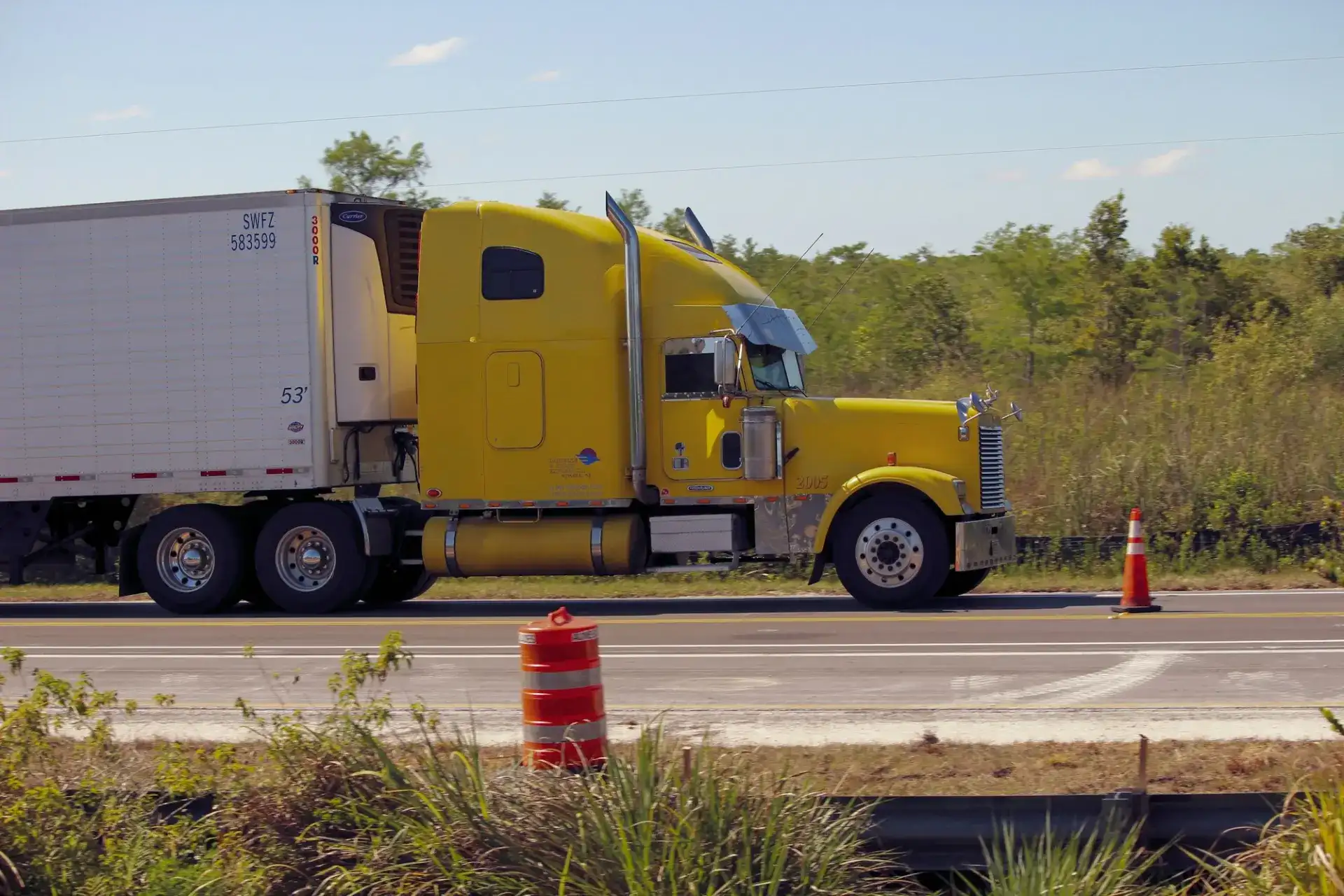
A yellow tractor-trailer driving along a highway past orange traffic barrels

All exams/Driving & Licenses/CDL Hazmat Endorsement/Free questions

Free CDL Hazmat Endorsement practice questions

Tap an answer to see if you are right, and why. 20 questions across 9 topics, mostly Shipping papers (3).

Questions last updated October 22, 2026 · Original practice questions on the hazardous materials endorsement, written from the federal knowledge requirements in 49 CFR Part 383 and the public CDL manual facts; not official state test questions.

The real test

Multiple-choice knowledge test · 80% to pass (49 CFR 383.135) · item count set by your state.

80% to pass · question count set by your state

0 of 20 answeredTap an answer to check it
  1. Hazmat basics1 of 20

    Where are the Hazardous Materials Regulations found?

    The answer

    Answer: B. The common reference for these regulations is 49 CFR 171 to 180. Parts 1 to 50 of title 40 deal with other subject matter, parts 380 to 399 of title 49 cover motor carrier safety, and state codes do not hold these federal rules, so look in 49 CFR 171 to 180 for the hazmat regulations.

    Source: 9 - Hazardous Material (introduction)

  2. Hazmat basics2 of 20

    What do you need before driving any size vehicle used to transport hazardous material as defined in 49 CFR 383.5?

    The answer

    Answer: B. To get the endorsement you must pass a written test about the regulations and requirements. A tank vehicle or passenger endorsement covers different hazards, and a state permit alone is not the federal requirement, so a CDL with the hazardous materials endorsement is needed whatever the vehicle size.

    Source: 9 - Hazardous Material (introduction)

  3. Hazard classes3 of 20

    How many different hazard classes does the manual describe?

    The answer

    Answer: B. The nine classes are shown in Figure 9.1, with divisions in some classes. Five, twelve and twenty are not the number of classes, since the manual describes nine hazard classes, and some of them are divided into divisions for more specific hazards.

    Source: 9.3.1 - Definitions

  4. Hazard classes4 of 20

    Which hazard class includes gasoline?

    The answer

    Answer: B. Acetone is another example given for flammable liquids. Compressed gases, corrosives and oxidizers are separate classes with their own hazards, whereas gasoline is a flammable liquid in Class 3, and acetone is another example the manual gives. Flammable liquids give off vapor that burns at ordinary temperatures, which is why they sit in their own class.

    Source: 9.3.1 - Definitions

  5. Shipping papers5 of 20

    Which of these is a shipping paper?

    The answer

    Answer: A. Shipping orders, bills of lading and manifests are all shipping papers. A fuel receipt, a parking permit and a driver's logbook describe the trip or the truck, not the cargo, whereas a bill of lading is a shipping paper listing what is carried.

    Source: 9.3.4 - The Shipping Paper

  6. Shipping papers6 of 20

    Where must you keep shipping papers while driving?

    The answer

    Answer: A. When you are out of the vehicle, leave them on the driver's seat. The glove box, the sleeper berth and under the seat put the papers out of reach or sight if you are injured, so keep them in a door pouch or in clear view where a rescuer can find them quickly.

    Source: 9.3.4 - The Shipping Paper

  7. Shipping papers7 of 20

    Why is it important to locate hazardous materials shipping papers quickly?

    The answer

    Answer: C. After an accident you may be injured and unable to communicate the hazards. Invoices, scale counts and pay checks are not the reason, because after a crash you may be unable to speak, so the papers tell firefighters and police what the load is and how to protect themselves.

    Source: 9.3.4 - The Shipping Paper

  8. Marking labeling8 of 20

    What do shippers put on most hazardous materials packages to warn others?

    The answer

    Answer: B. If the label will not fit, the shipper may put it on a tag securely attached to the package. Round stickers with the carrier's name, barcodes and plates with the shipper's address do not warn of a hazard, whereas diamond-shaped hazard labels show the class at a glance.

    Source: 9.3.2 - Package Labels

  9. Marking labeling9 of 20

    What is an identification number?

    The answer

    Answer: B. An identification number may identify more than one chemical, and it is preceded by NA or UN. A seven-digit shipper code, a letter pair for the class and a package weight are not what an identification number is, since it is a four-digit code with a UN or NA prefix that responders look up.

    Source: 9.3.3 - Lists of Regulated Products

  10. Placarding10 of 20

    What are placards?

    The answer

    Answer: A. Placards are used to warn others of hazardous materials. Cab reminders, license stamps and tags on shipping papers are not placards, which are signs on the outside of the vehicle and bulk packages that show other people the hazard class.

    Source: 9.3.3 - Lists of Regulated Products

  11. Placarding11 of 20

    How many identical placards must a placarded vehicle have, and where?

    The answer

    Answer: B. Placards must be readable from all four directions. Two placards, six placards or one on the door would leave some directions without a warning, so a placarded vehicle needs at least four, one on the front, rear and each side.

    Source: 9.3.3 - Lists of Regulated Products

  12. Placarding12 of 20

    When must Table 1 materials be placarded?

    The answer

    Answer: B. Table 1 includes Divisions 1.1, 1.2, 1.3, 2.3, 4.3 and certain 5.2, 6.1 and 7 materials. The 1,001 pound threshold, interstate trips and bulk loads relate to other table rules, whereas Table 1 materials are dangerous enough that any amount requires placards.

    Source: 9.3.11 - Placard Tables

  13. Loading segregation13 of 20

    What must you do before loading or unloading hazardous materials?

    The answer

    Answer: B. Do all you can to protect containers of hazardous materials. Hazard lights, open doors, air-line disconnection, lowered landing gear and removed keys do not secure the vehicle, so set the parking brake and make sure it will not move while the hazardous materials are handled.

    Source: 9.4.1 - General Loading Requirements

  14. Loading segregation14 of 20

    Around which hazard classes must you never smoke when loading or unloading?

    The answer

    Answer: D. Keep fire away and do not let people smoke nearby. Class 6, 7, 8 and 9 materials and non-flammable gases do not ignite so readily, whereas Class 1, Division 2.1 and Classes 3, 4 and 5 could burn or explode, so no smoking is allowed around them.

    Source: 9.4.1 - General Loading Requirements

  15. Driving parking routes15 of 20

    How close to the traveled part of the road may you park with Division 1.1, 1.2 or 1.3 explosives?

    The answer

    Answer: A. Except for short periods needed for operations, do not park within 300 feet of a bridge, tunnel or building. Within five feet if attended, 50 feet if attended or 300 feet if lit do not match the rule, which says never park within five feet of the traveled road, and not within 300 feet of a bridge, tunnel or building except briefly.

    Source: 9.6.1 - Parking with Division 1.1, 1.2, or 1.3 Explosives

  16. Driving parking routes16 of 20

    What is a safe haven?

    The answer

    Answer: A. Designation of authorized safe havens is usually made by local authorities. A truck stop, a rest area and a weigh station are open to the public and could put the explosives near people, whereas a safe haven is an approved place where an unattended explosive-loaded vehicle may be parked.

    Source: 9.6.1 - Parking with Division 1.1, 1.2, or 1.3 Explosives

  17. Emergencies notification17 of 20

    What is the Emergency Response Guidebook (ERG)?

    The answer

    Answer: D. It is indexed by proper shipping name and hazardous materials identification number. Approved truck routes, rest stops and shipping rates are not the topic, since the ERG is a DOT guidebook used by responders to protect themselves, indexed by shipping name and identification number.

    Source: 9.7.1 - Emergency Response Guidebook (ERG)

  18. Emergencies notification18 of 20

    What must you never do around a leak or spill?

    The answer

    Answer: A. Do not touch any leaking material, since many people injure themselves that way. Warning others, staying upwind and calling for help are correct responses to a spill, but eating, drinking or smoking near a leak could bring the hazard into your body or ignite it.

    Source: 9.7.3 - Fires

  19. Endorsement tsa19 of 20

    How often must a State require hazardous materials endorsements to be renewed, under 49 CFR 383.141(d)?

    The answer

    Answer: D. The State must also notify the holder at least 60 days before the endorsement expires. Every 10 years, every 20 years and once only do not fit the rule, because a State must require renewal at least every 5 years, and the holder is notified 60 days before expiry.

    Source: 49 CFR 383.141 - Requirement for TSA approval of hazardous materials endorsement issuances

  20. Endorsement tsa20 of 20

    Which person may apply for a security threat assessment for a hazardous materials endorsement under 49 CFR 1572.105?

    The answer

    Answer: A. A national of the United States, a refugee or an asylee may also apply. A tourist visitor, an asylum applicant and a person under sixteen are not on the list, whereas lawful permanent residents may apply, as may nationals, refugees and asylees.

    Source: 49 CFR 1572.105 - Immigration status

That’s the free set. The full bank has 150.

More original practice questions across the listed topics, a 50-question timed exam simulator, and saved mistake review. 80% is the federal threshold in 49 CFR 383.135. The regulation sets the percentage only — your state driver licensing agency sets how many questions the test has. One payment of $8.99, yours forever.

Practice the free set